Wheels and castors for food processing industries

'%3e%3cg id='Final-Copy-2_2_' transform='translate(1275.000000, 200.000000)'%3e%3cpath class='st0' d='M7.4,12.8h6.8l3.1-11.6H7.4C4.2,1.2,1.6,3.8,1.6,7S4.2,12.8,7.4,12.8z'/%3e%3c/g%3e%3c/g%3e%3c/g%3e%3cg id='final---dec.11-2020'%3e%3cg id='_x30_208-our-toggle' transform='translate(-1275.000000, -200.000000)'%3e%3cg id='Final-Copy-2' transform='translate(1275.000000, 200.000000)'%3e%3cpath class='st1' d='M22.6,0H7.4c-3.9,0-7,3.1-7,7s3.1,7,7,7h15.2c3.9,0,7-3.1,7-7S26.4,0,22.6,0z M1.6,7c0-3.2,2.6-5.8,5.8-5.8 h9.9l-3.1,11.6H7.4C4.2,12.8,1.6,10.2,1.6,7z'/%3e%3cpath id='x' class='st2' d='M24.6,4c0.2,0.2,0.2,0.6,0,0.8l0,0L22.5,7l2.2,2.2c0.2,0.2,0.2,0.6,0,0.8c-0.2,0.2-0.6,0.2-0.8,0 l0,0l-2.2-2.2L19.5,10c-0.2,0.2-0.6,0.2-0.8,0c-0.2-0.2-0.2-0.6,0-0.8l0,0L20.8,7l-2.2-2.2c-0.2-0.2-0.2-0.6,0-0.8 c0.2-0.2,0.6-0.2,0.8,0l0,0l2.2,2.2L23.8,4C24,3.8,24.4,3.8,24.6,4z'/%3e%3cpath id='y' class='st3' d='M12.7,4.1c0.2,0.2,0.3,0.6,0.1,0.8l0,0L8.6,9.8C8.5,9.9,8.4,10,8.3,10c-0.2,0.1-0.5,0.1-0.7-0.1l0,0 L5.4,7.7c-0.2-0.2-0.2-0.6,0-0.8c0.2-0.2,0.6-0.2,0.8,0l0,0L8,8.6l3.8-4.5C12,3.9,12.4,3.9,12.7,4.1z'/%3e%3c/g%3e%3c/g%3e%3c/g%3e%3c/g%3e%3c/svg%3e) Le tue preferenze relative alla privacy
Le tue preferenze relative alla privacy

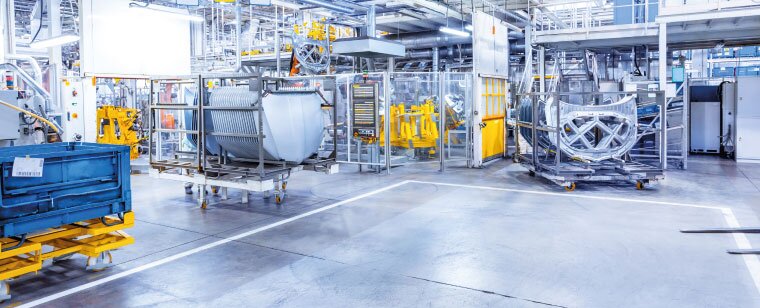
Wheels and castors for food processing industries
Wheels, castors and accessories for trolleys used in internal industrial logistics
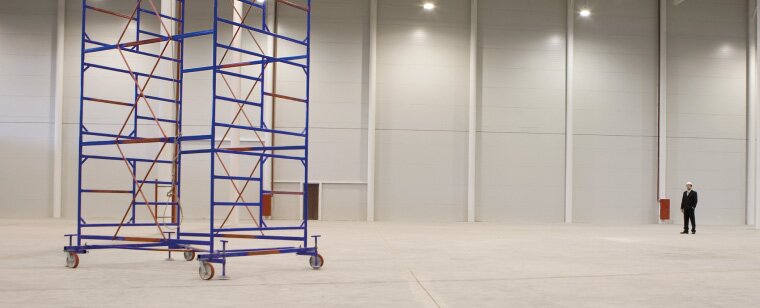
Castors for scaffoldings
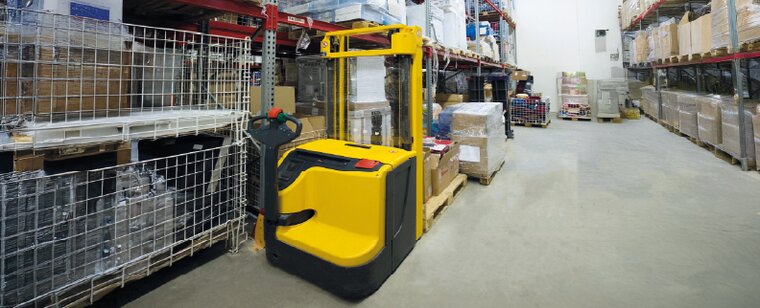
Rollers, drive wheels and stabilizer wheels for pallet trucks
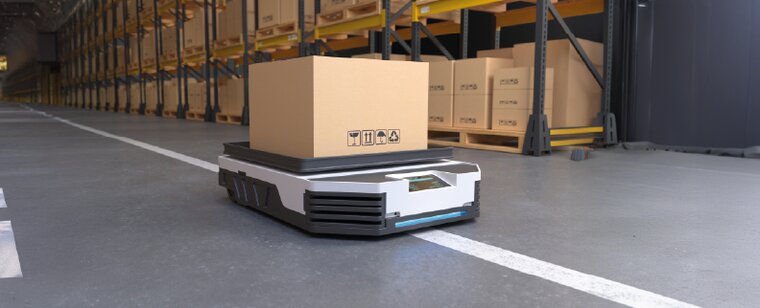
Compact castors and Drive wheels for AGVs, AMRs and robotic systems
 TECHNICAL DATA
The castor is the connecting element between the wheel and the trolley*. Normally, all wheels require a castor in order to be assembled to the trolley; wheels whose axle forms part of the trolley are an exception to this rule.
Castors can be swivel or fixed.
*"Trolley" is conventionally intended as any apparatus or machine to which wheels and castors are attached in order to facilitate handling of the trolley itself.
The swivel castor rotates about its vertical axis as the travel direction changes. The wheel axle is offset with respect to the castor axis in order to achieve optimal manoeuvrability of the trolley, i.e. the ability of the trolley to change direction.
An excessively large offset reduces trolley directionality due to oscillation of the wheel (swimmy effect).
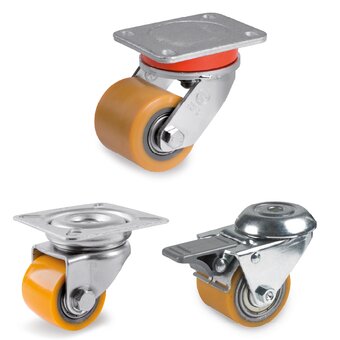
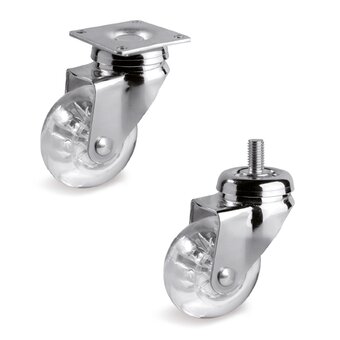
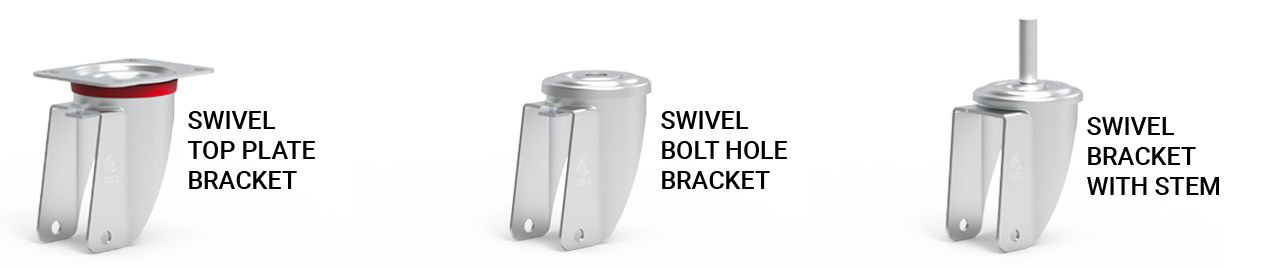
Depending on the type of attachment to the trolley, swivel castors can have a plate, a through-hole or a stem.
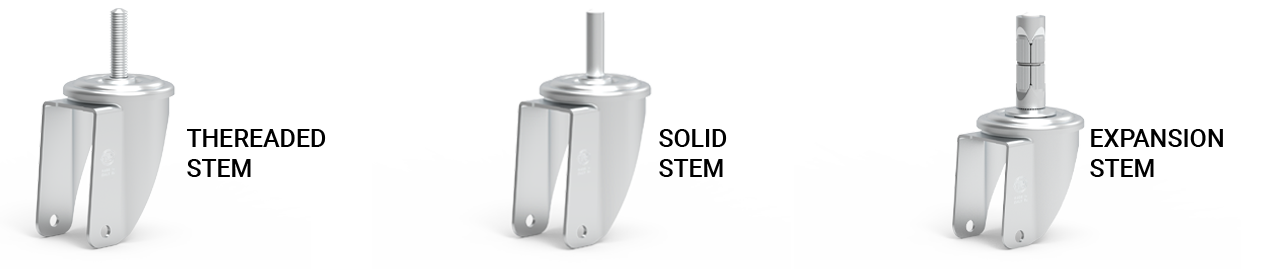
Swivel castors with a stem can be equipped with different stem types and sizes, depending on how the assembly is attached to the trolley: threaded stem, plain stem and expansion stem.
The components of a swivel castor are: the attachment plate, the fork, the ball race ring, the swivel actions, the central pin and, where applicable, the dust seal.

The attachment plate is the element that fixes the castor to the trolley. It can be made in different shapes:
- Rectangular with four fixing holes;
- Square with four fixing holes;
- Triangular with three fixing holes;
- Circular with through hole;
- Circular with stem.
The fork is the element with the characteristic inverted "U" shape that supports the wheel. The holes for the wheel axle set are located at the lower ends, while the swivel actions are located in the upper part.
The ball race ring is the element that contains the castor's swivel actions. In special cases, it may have exclusively dust seal or protective functions.
The swivel actions allow the plate to rotate on the fork. They consist of rings of balls between the plate and the fork (known as "ball races") or ball bearings, taper roller bearings or axial bearings, appropriately lubricated with grease to protect against dust, liquids and other aggressive agents.
The swivel actions significantly affect the castor load capacity.
The central pin is the element that joins the plate and the ball race ring (ATS); the plate and ATS thus form a single piece, while the fork remains free to rotate about its own axis.
The pin can be:
- Integral with the plate, made by pressing followed by riveting after assembly of the components;
- Integral with the plate, made by hot forming on the plates and subsequently tightened with a self-locking nut;
- Composed of a commercial screw and nut.
The dust seal is a protective element for the swivel actions of the swivel castor. It protects the swivel actions from dust and solid aggressive agents of medium particle size.
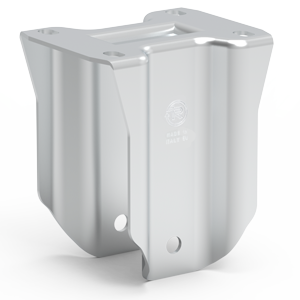
The fixed castor is designed to keep the wheel on a straight trajectory and thus guarantees directionality of the trolley, while manoeuvrability depends on the use of swivel castors.
The fixed castor is generally made of a single piece of pressed sheet steel in the shape of an inverted "U". The two bottom ends have holes to accommodate the wheel axle set, while the upper part has fixing holes for attachment to the trolley.
 |
The fixed castor is designed to keep the wheel on a straight trajectory and thus guarantees directionality of the trolley, while manoeuvrability depends on the use of swivel castors. The fixed castor is generally made of a single piece of pressed sheet steel in the shape of an inverted "U". The two bottom ends have holes to accommodate the wheel axle set, while the upper part has fixing holes for attachment to the trolley. |