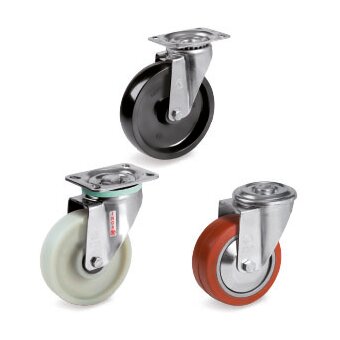
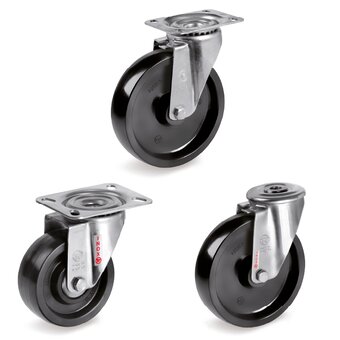
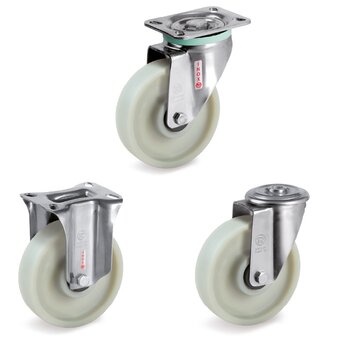
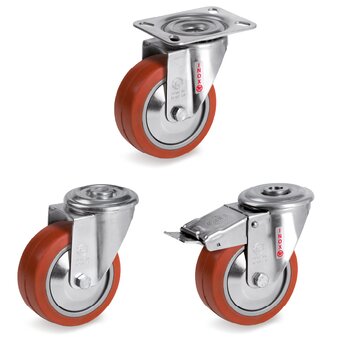
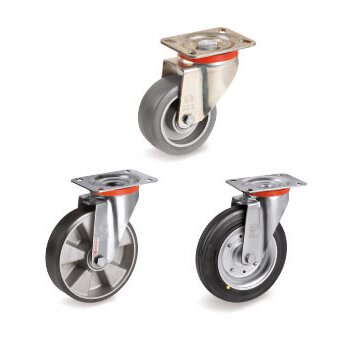
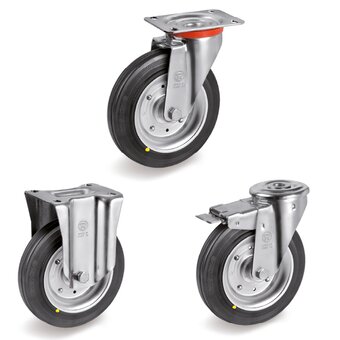
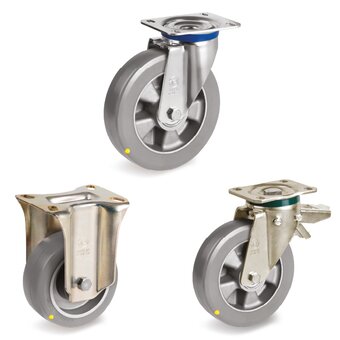
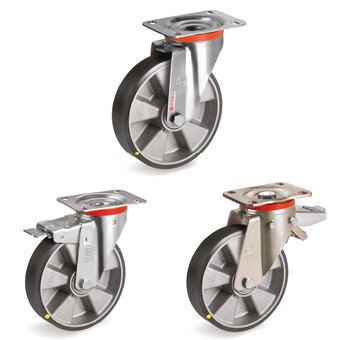
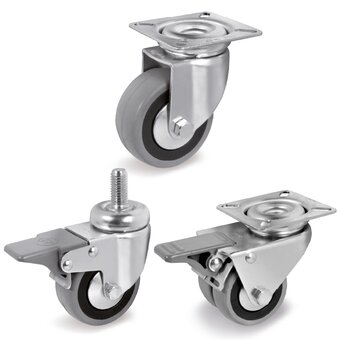
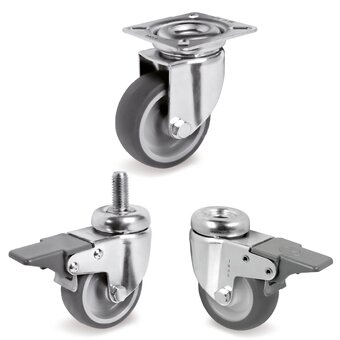
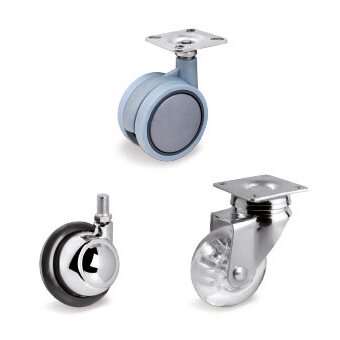
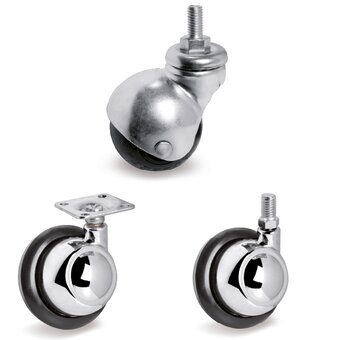
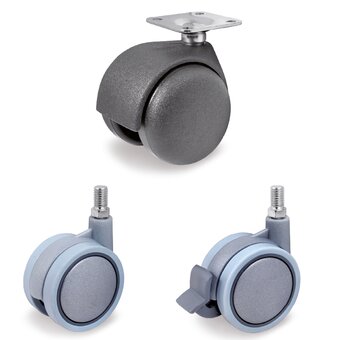
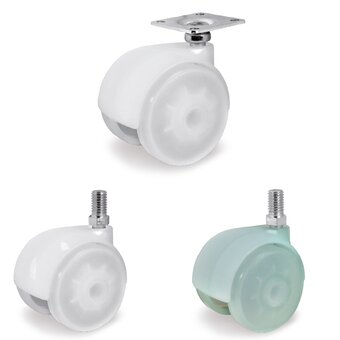
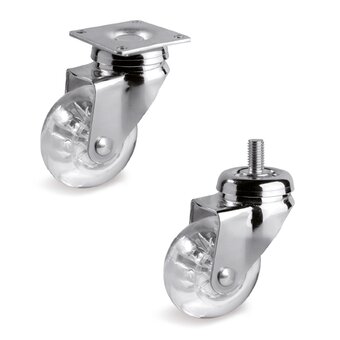
Wheels and castors for food processing industries

'%3e%3cg id='Final-Copy-2_2_' transform='translate(1275.000000, 200.000000)'%3e%3cpath class='st0' d='M7.4,12.8h6.8l3.1-11.6H7.4C4.2,1.2,1.6,3.8,1.6,7S4.2,12.8,7.4,12.8z'/%3e%3c/g%3e%3c/g%3e%3c/g%3e%3cg id='final---dec.11-2020'%3e%3cg id='_x30_208-our-toggle' transform='translate(-1275.000000, -200.000000)'%3e%3cg id='Final-Copy-2' transform='translate(1275.000000, 200.000000)'%3e%3cpath class='st1' d='M22.6,0H7.4c-3.9,0-7,3.1-7,7s3.1,7,7,7h15.2c3.9,0,7-3.1,7-7S26.4,0,22.6,0z M1.6,7c0-3.2,2.6-5.8,5.8-5.8 h9.9l-3.1,11.6H7.4C4.2,12.8,1.6,10.2,1.6,7z'/%3e%3cpath id='x' class='st2' d='M24.6,4c0.2,0.2,0.2,0.6,0,0.8l0,0L22.5,7l2.2,2.2c0.2,0.2,0.2,0.6,0,0.8c-0.2,0.2-0.6,0.2-0.8,0 l0,0l-2.2-2.2L19.5,10c-0.2,0.2-0.6,0.2-0.8,0c-0.2-0.2-0.2-0.6,0-0.8l0,0L20.8,7l-2.2-2.2c-0.2-0.2-0.2-0.6,0-0.8 c0.2-0.2,0.6-0.2,0.8,0l0,0l2.2,2.2L23.8,4C24,3.8,24.4,3.8,24.6,4z'/%3e%3cpath id='y' class='st3' d='M12.7,4.1c0.2,0.2,0.3,0.6,0.1,0.8l0,0L8.6,9.8C8.5,9.9,8.4,10,8.3,10c-0.2,0.1-0.5,0.1-0.7-0.1l0,0 L5.4,7.7c-0.2-0.2-0.2-0.6,0-0.8c0.2-0.2,0.6-0.2,0.8,0l0,0L8,8.6l3.8-4.5C12,3.9,12.4,3.9,12.7,4.1z'/%3e%3c/g%3e%3c/g%3e%3c/g%3e%3c/g%3e%3c/svg%3e) Le tue preferenze relative alla privacy
Le tue preferenze relative alla privacy

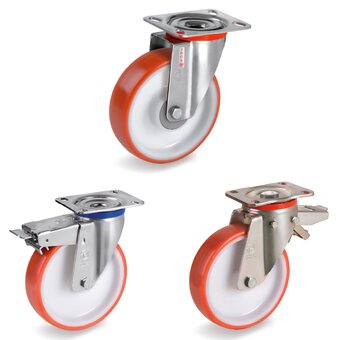
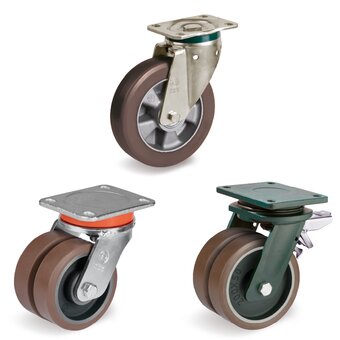
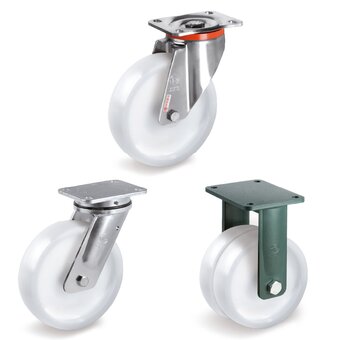
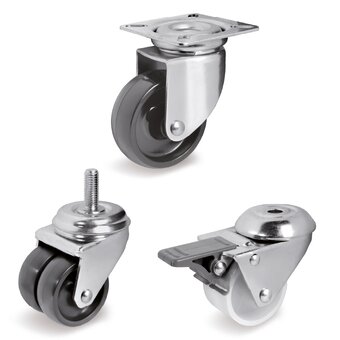
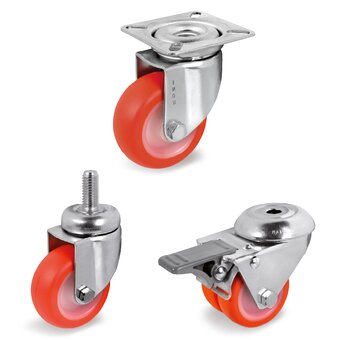
Wheels and castors for food processing industries
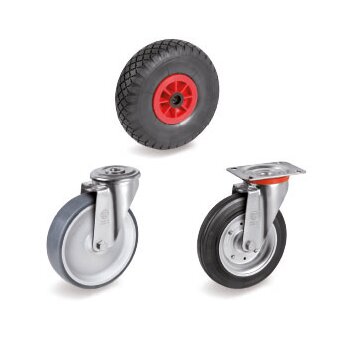
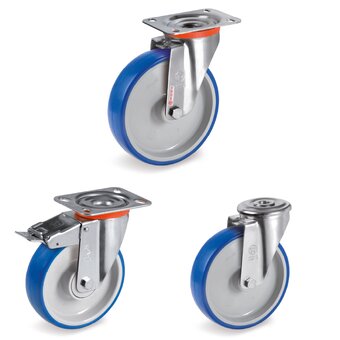
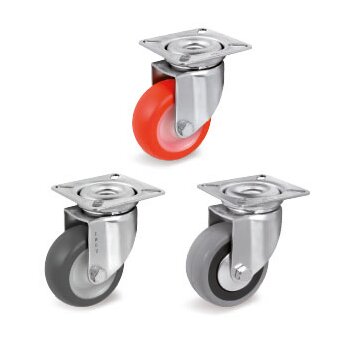
Wheels, castors and accessories for trolleys used in internal industrial logistics
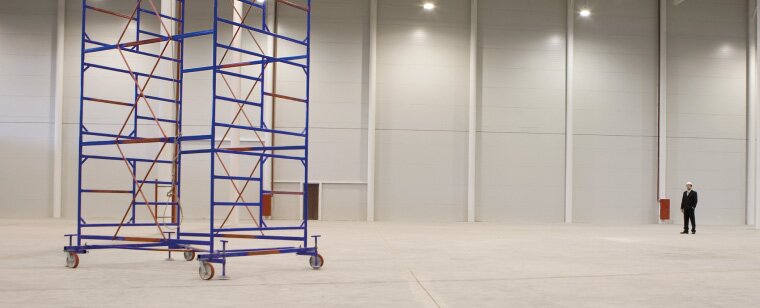
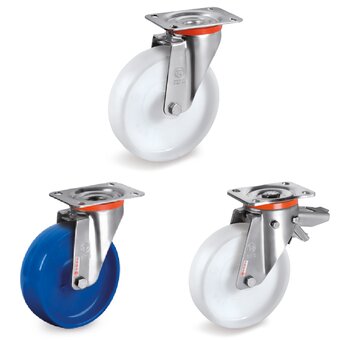
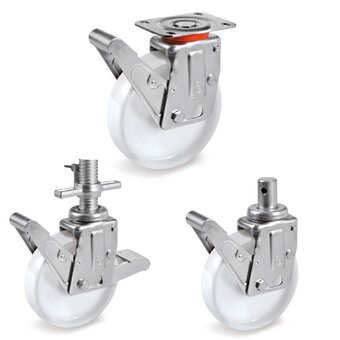
Castors for scaffoldings
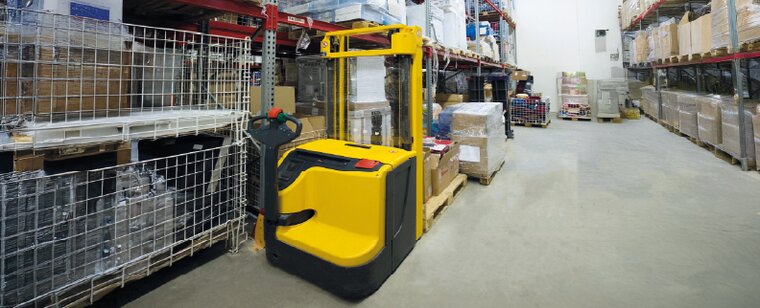
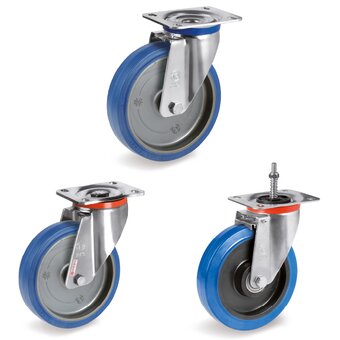
Rollers, drive wheels and stabilizer wheels for pallet trucks
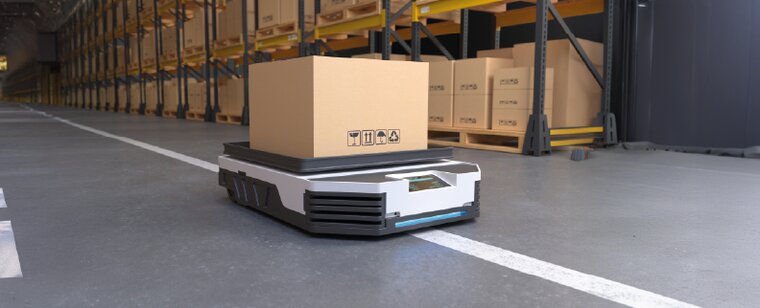
Compact castors and Drive wheels for AGVs, AMRs and robotic systems
 TECHNICAL DATA
Proper use and regular maintenance are essential to ensure optimal performance, operational safety and long service life for industrial wheels and castors. This guide provides key recommendations for product selection, installation, operation and maintenance, helping to reduce wear, prevent failures and maintain high performance over time.
The wheel and castor carrying capacity declared by the manufacturer for industrial, institutional and domestic applications is the maximum value, expressed in daN, that a wheel or a castor can be subjected to without reducing its operating efficiency. The user must check the suitability of the carrying capacity declared by the manufacturer in relation to the load, the layout of wheels and castors on the trolley to be moved, the number of wheels effectively in contact with the ground, and any other conditions (type of surface on which trolley moves, temperature, humidity, presence of aggressive chemical agents in the operating environment) that may affect the operating conditions of moving mechanical parts.
The user must check that the force needed to move the trolley with the intended load is compatible with the applicable regulations in force.
To facilitate the choice of the optimal wheel, also in relation to the force required to move the trolley, the Tellure Rôta catalogue shows the rolling resistance value of each product.
The maximum speed to which the rated carrying capacities stated by Tellure Rôta refer is 4 km/h (1.1 m/s). For higher speed applications refer to heading 5.4 of this technical manual.
The rated carrying capacity declared by the manufacturer refers to use on smooth and compact floors in good condition. Uneven floors, obstacles and level differences require larger diameter wheels and more elastic tyres (see heading 5.1).
The rated carrying capacity stated by the manufacturer refers to manual propulsion with interruptions during use. For continuous operation or powered towing refer to the Tellure Rôta notes.
The user must check that the construction materials of the selected product are compatible with the physical-chemical conditions in the operating environment (humidity, temperature, aggressive agents etc.). The Tellure Rôta catalogue shows the "normal" operating conditions for each type of wheel.
The market offers products that guarantee electric conductivity from the attachment element to the wheel tread.
The electrical resistance of these products is less than 10,000 Ohm, as measured with an ohmmeter or other device designed to measure electrical resistance with 500 Vdc open circuit voltage and with internal impedance such that the output voltage never drops below 50 Vdc when the ohmmeter is connected to an external resistance of 1,000 ohm.
After installation, the user must check electrical conductivity from the trolley to the tread.
The manufacturer of wheels and castors for industrial, institutional and home applications produces castors equipped with brakes and/or locks. These are designed to immobilise the trolley on slopes of no more than 3%, on the condition that at least two of the trolley wheels equipped with such devices are in contact with the ground.
For correct use of wheels and castors, the following conditions must be avoided in all circumstances:
- overloads;
- non-uniform load distribution;
- violent application of the load;
- prolonged stationary periods under load;
- impacts and collisions;
- dropping of the trolley due to floor height differences;
- engagement of locks and/or brakes while the trolley is moving;
- moving the trolley with locks and/or brakes engaged;
- parking the trolley with locks and/or brakes engaged on slopes of more than 3%;
· washing with chemically aggressive cleaners;
· replacement of wheel and/or castor with parts that do not comply with the manufacturer's specifications;
The products must be stored in a well-ventilated area, without excessive humidity, with a temperature range of between -10 °C and +40 °C and protected against dust. Never expose products to direct sunlight or atmospheric agents for extended periods of time and, in general, avoid prolonged storage.
For optimal storage and dust protection, Tellure Rôta products are supplied in standard shrink-wrapped packs.
- Check any damage to the trolley frame that may have impaired correct attachment of the product;
- Check that the product fastening devices are correctly tightened on the trolley structure.
- Check that the product is intact, fully operational and without excessive play, wear, deformation or tearing;
- Check the efficiency of locking devices and/or brakes, if present;
- Check that the product has not deteriorated due to the environmental conditions (rusting, corrosion, foreign matter, etc.), thus reducing its operating efficiency;
- For products designed to guarantee electrical conductivity, keep the rolling strip clean and periodically perform electrical conductivity tests;
- Check that the wheel axle set is correctly tightened and reapply the prescribed tightening torque if necessary;
- Lubricate moving parts with suitable lubricants in relation to the application.
The following chart shows the maximum time interval between two successive checks. For particularly demanding conditions, the time interval between checks must be evaluated in relation to the specific application.
Type of required checks and maintenance |
Time interval |
|
| Trolley structure/frame |
Damage to frame | 12 months |
| Tightening of fastening elements | 6 months | |
| Wheels and castors | Product integrity | 6 months |
| Efficiency of braking devices | 3 months | |
| Product deterioration | 6 months | |
| Electrical conductivity | 3 months | |
| Tightening of wheel axle set | 6 months | |
| Re-lubrication | 6 months* |
* = Re-lubricate after each product washing cycle.